
In the B2B tech ecosystem, the traditional mass press release distribution model is facing an unsustainable crisis of effectiveness. For decades, the standard public relations practice consisted of drafting a generic release, uploading massive contact databases, and executing blast sends to hundreds of journalists with the hope of securing coverage. Today, this approach yields negligible open and interest rates across newsrooms, damages corporate domain reputation, and alienates decision-makers.
Journalists specializing in technology, economics, and business receive dozens of pitch emails daily. Amid this information saturation, hyper-personalization in PR strategy stands as the sole methodology capable of cutting through the noise, building trusted relationships with editors, and converting earned media into a credibility engine that drives B2B growth.
The failure of mass media distribution in B2B and technology markets
The most critical mistake communications departments and traditional PR agencies make is treating B2B technology PR as if it were a mass consumer (B2C) channel. A decision-maker purchasing B2B technology is not looking for abstract promotional announcements; they evaluate operational efficiency metrics, return on investment, downtime reduction, and proven industry case studies.
When a company sends generic press releases without tailoring the news angle to an outlet's specific editorial focus, the email is flagged immediately as spam. This lack of journalistic context destroys coverage opportunities, wastes C-suite time, and projects a complete disconnect with real industry challenges.
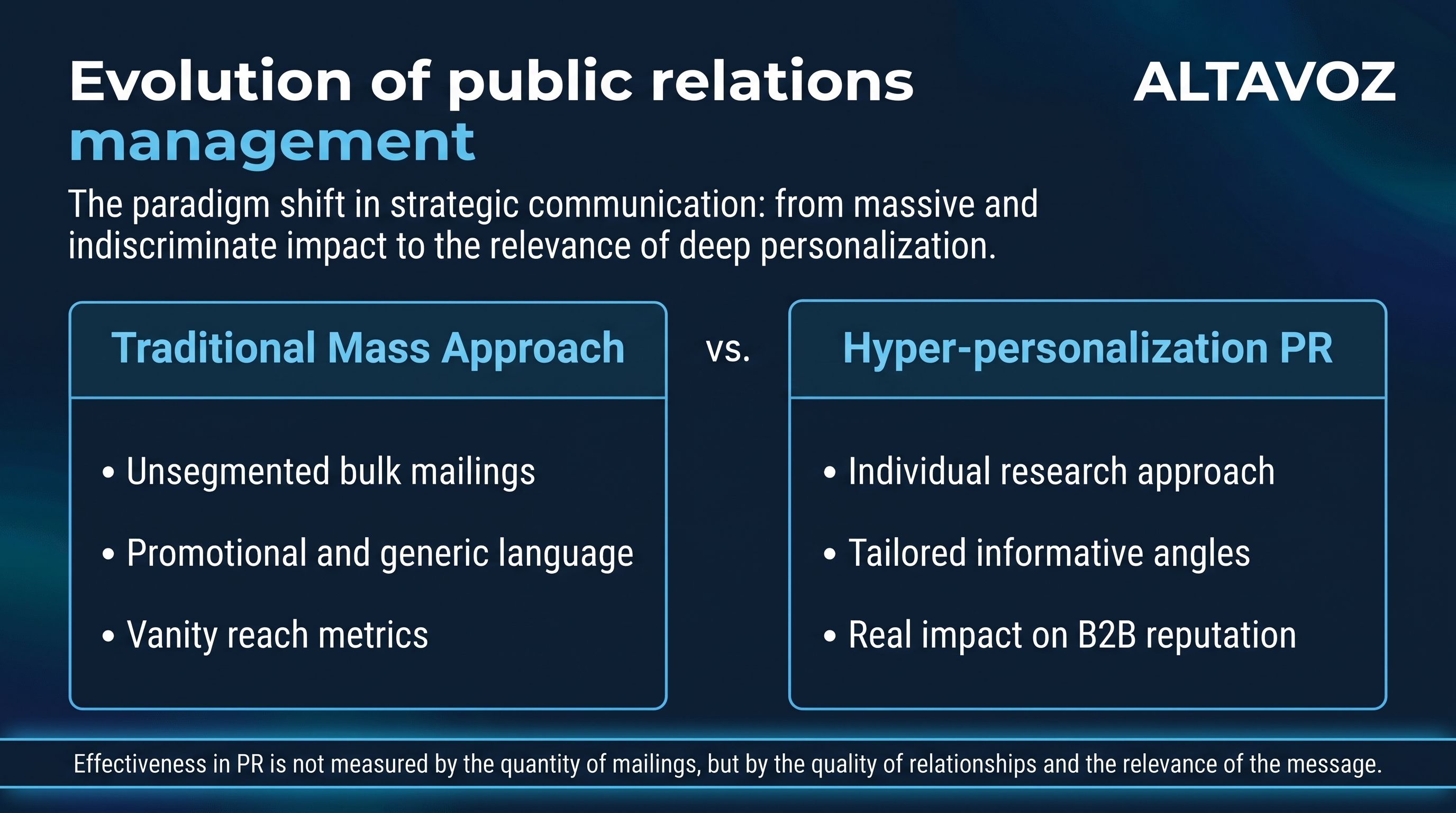
Three pillars to execute a hyper-personalized PR strategy
To convince specialized journalists and Tier 1 business outlets to adopt a B2B or tech story, public relations management must be structured around three core principles:
1. Editorial profile research and coverage gap analysis
Before drafting any pitch or release, the PR team must analyze the target journalist's recent coverage history. Identifying their specific interests, recent narrative angles, and unaddressed industry questions enables the creation of a pitch tailored to their editorial needs.
2. Tailoring news hooks to industry pain points
A technological advancement or new B2B software lacks news value if framed solely as a product launch. The narrative must be anchored within a broader market trend: how the technology solves an operational efficiency issue, reduces system downtime, or helps firms manage operating expenses (Opex).
3. Delivering high-value assets: exclusive data and executive access
Tech and business journalists value resources that streamline their writing process. Providing research backed by fresh hard data, explanatory charts, direct access to media-trained C-suite spokespersons, and real-world case studies positions the company as a go-to expert source.
Request an initial strategic meeting

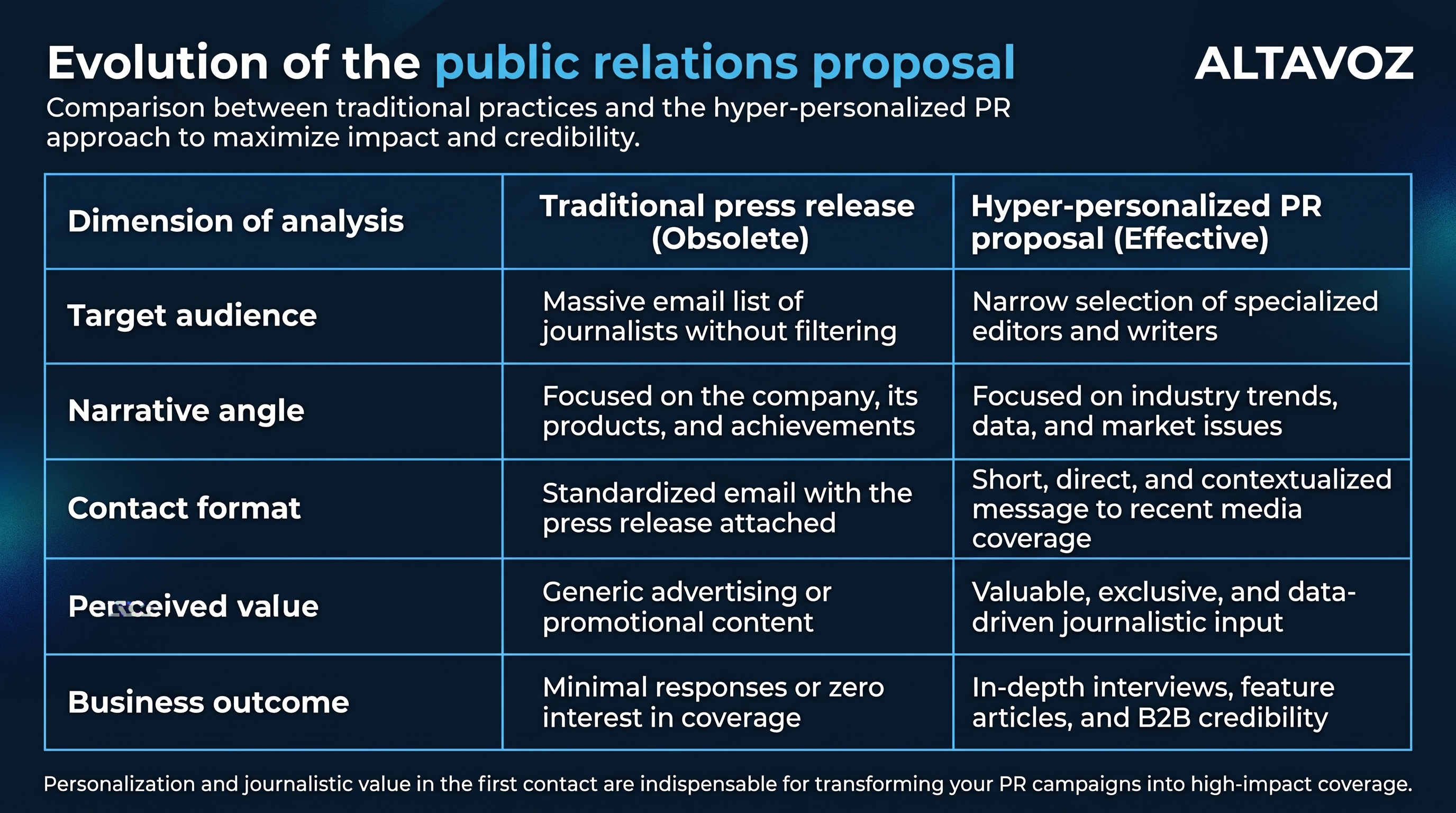
Strategic comparison: traditional press release versus hyper-personalized pitch
Evaluating the difference between a mass distribution approach and a hyper-personalized pitch highlights the transformation in media engagement quality:
Personalization as the foundation of B2B reputation
In B2B technology sectors, high-value commercial sales are built on trust, market authority, and corporate reputation.
Organizations that realize public relations is not measured by blast email volume, but by strategic precision and media relevance, will dominate public conversations in their sector and accelerate business growth.
At Altavoz Comunicaciones, we specialize in corporate communications counsel, public relations strategy, and B2B positioning for technology firms and executive boards. We help organizations build hyper-personalized PR strategies that engage key media outlets, safeguard brand equity, and drive direct business results.