In public relations and corporate communications management, the subject line of an email represents the single most critical filter determining the success of a press pitch. Newsroom editors and journalists receive hundreds of releases and pitches daily. Faced with this volume, media professionals devote only a few seconds to scanning their inboxes. An imprecise, overly commercial, or poorly formatted subject line does not just cause a pitch to be ignored; it triggers automated spam filters that divert the email directly to the junk folder.
In this landscape, mastering PR email subject line strategy is not merely a copywriting exercise. It is a core journalistic discipline designed to bypass technical filters, capture editor attention, and ensure corporate news reaches media decision-makers.
The danger of automated filters
The most damaging mistake public relations teams make is drafting email subject lines using hype, promotional language, or consumer marketing formulas. Words like "exclusive," "incredible," "free," "market leader," or the excessive use of exclamation points and ALL CAPS are immediately flagged by email servers as unsolicited spam.
When a press release drops into the spam folder or is deleted unread by an editor, an organization loses the opportunity to position its news story. Worse, repeated sends with low open rates degrade domain reputation for the agency or company, compromising future deliverability and harming long-term media relationships.
Applying journalistic editing standards from the initial email touchpoint ensures information is perceived as credible and professional, making it easy for editors to evaluate.
We build reputation

The three fundamental rules for drafting effective PR email subject lines
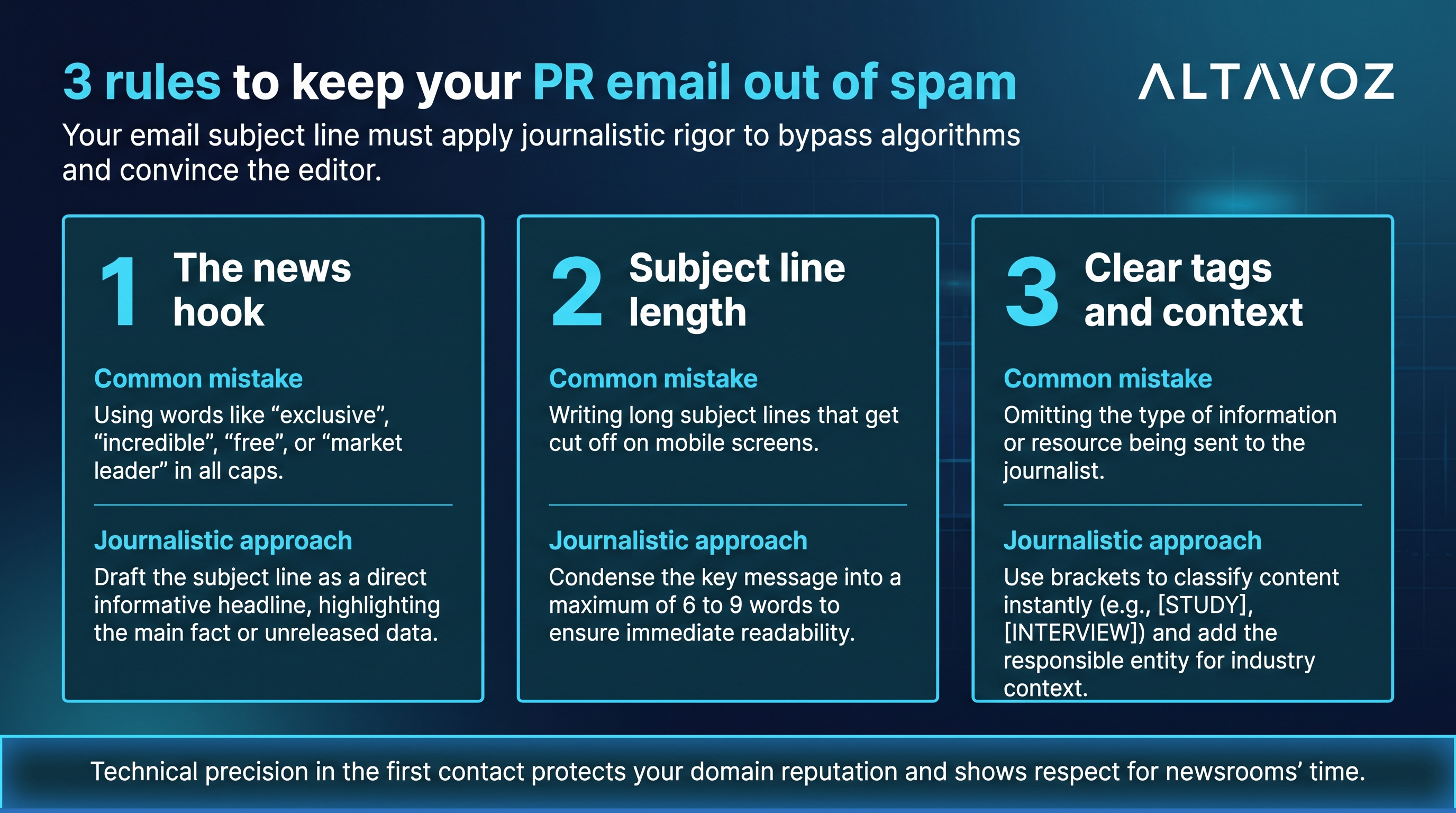
To bypass automated spam filters and maximize open rates across media newsrooms, communications teams should evaluate every subject line against three editing rules:
1. Lead with the news hook and eliminate promotional hype
The subject line must immediately answer why the news matters to the outlet's readership. It should be written like a news headline, highlighting the primary fact or fresh data point while stripping away commercial adjectives that undermine credibility.
2. Keep the length between 6 to 9 words (under 60 characters)
Most journalists scan pitches on mobile devices or email preview panes. If a subject line is too long, the vital news hook gets truncated. Condensing the message into fewer than ten words ensures full readability at a single glance.
3. Use clear format tags and corporate context
Adding concise bracketed tags—such as [PRESS RELEASE], [RESEARCH], [EXCLUSIVE], or [INTERVIEW]—helps editors classify content instantly. Including the company, institution, or executive name provides relevant industry context immediately.
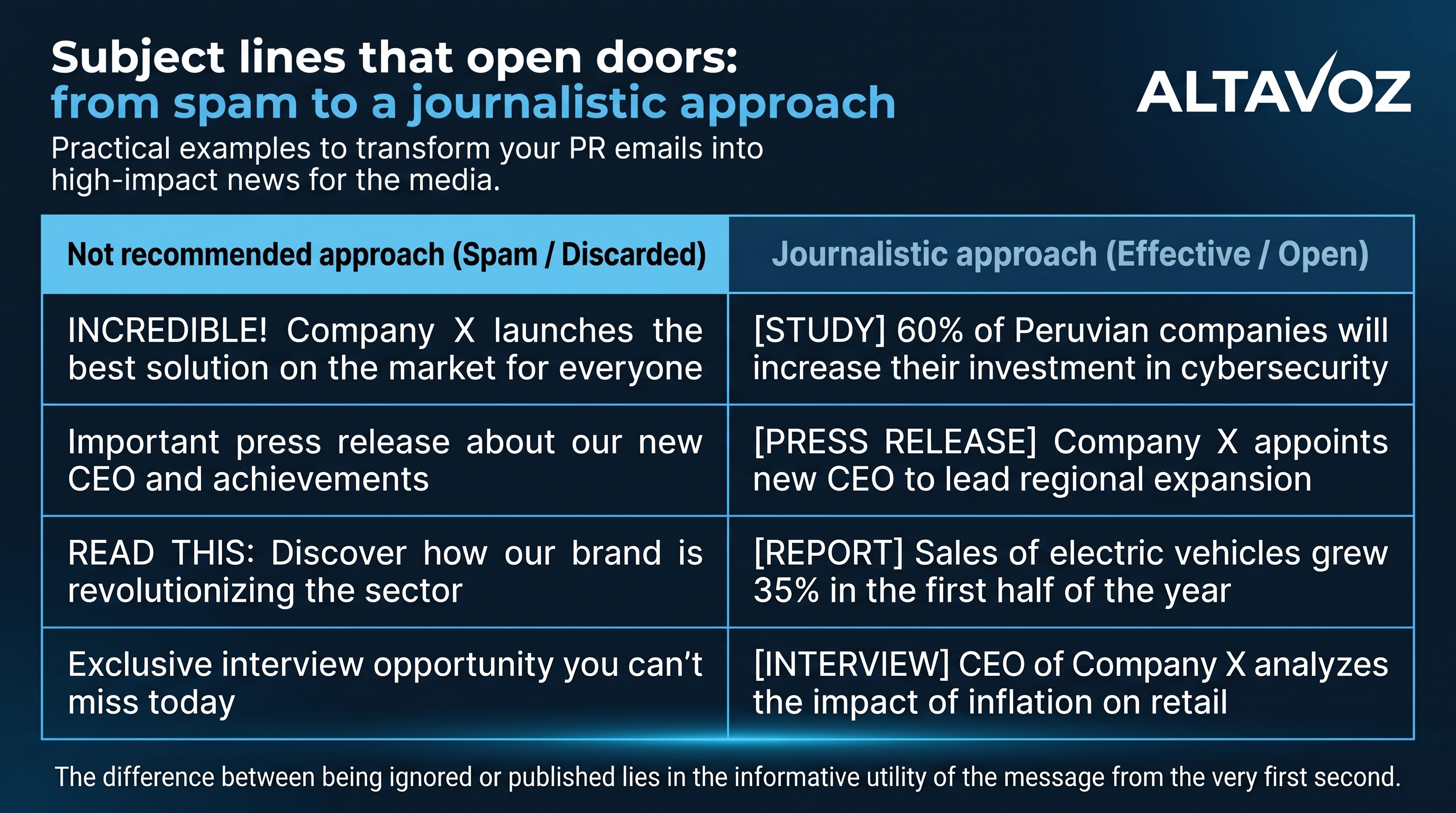
Subject line comparison: moving from errors to effective angles
Evaluating the difference between promotional hype and journalistic rigor helps identify necessary adjustments prior to pitch distribution:
Technical precision as a standard of credibility
An email subject line is the first impression an organization projects to news media.
Public relations teams that apply journalistic rigor to email pitches do not just avoid spam folders; they build a reputation for professionalism and respect for journalists' time, ensuring their corporate voice is heard and valued.
At Altavoz Comunicaciones, we specialize in corporate communications counsel, public relations strategy, and media relations for business leaders and executive boards. We help organizations structure their press distribution strategies with journalistic rigor, ensuring news stories reach the right media outlets to strengthen brand equity and drive business results.