Presenting periodic performance reports to the corporate board of directors is a crucial test for communications, marketing, and corporate affairs executives. Board meetings often allocate limited time windows to evaluate intangible asset management; therefore, presenting lengthy, operationally dense reports dilutes the perceived strategic value. According to corporate governance research published by Deloitte, over 70% of board members indicate that functional area reporting frequently lacks a clear connection to financial statements, reputational risk mitigation, and overarching business objectives.
In this environment, knowing how to report communications results to the board requires stepping away from traditional activity tracking models and adopting an executive synthesis framework centered on reputational capital return, brand protection, and alignment with commercial strategy.
The danger of tactical metrics in C-Suite reporting
The most damaging mistake when presenting to a board of directors is focusing on vanity metrics and secondary operational output. Highlighting the number of press releases distributed, pitch emails sent, or advertising value equivalency (AVE) demonstrates a severe disconnect with board-level priorities.
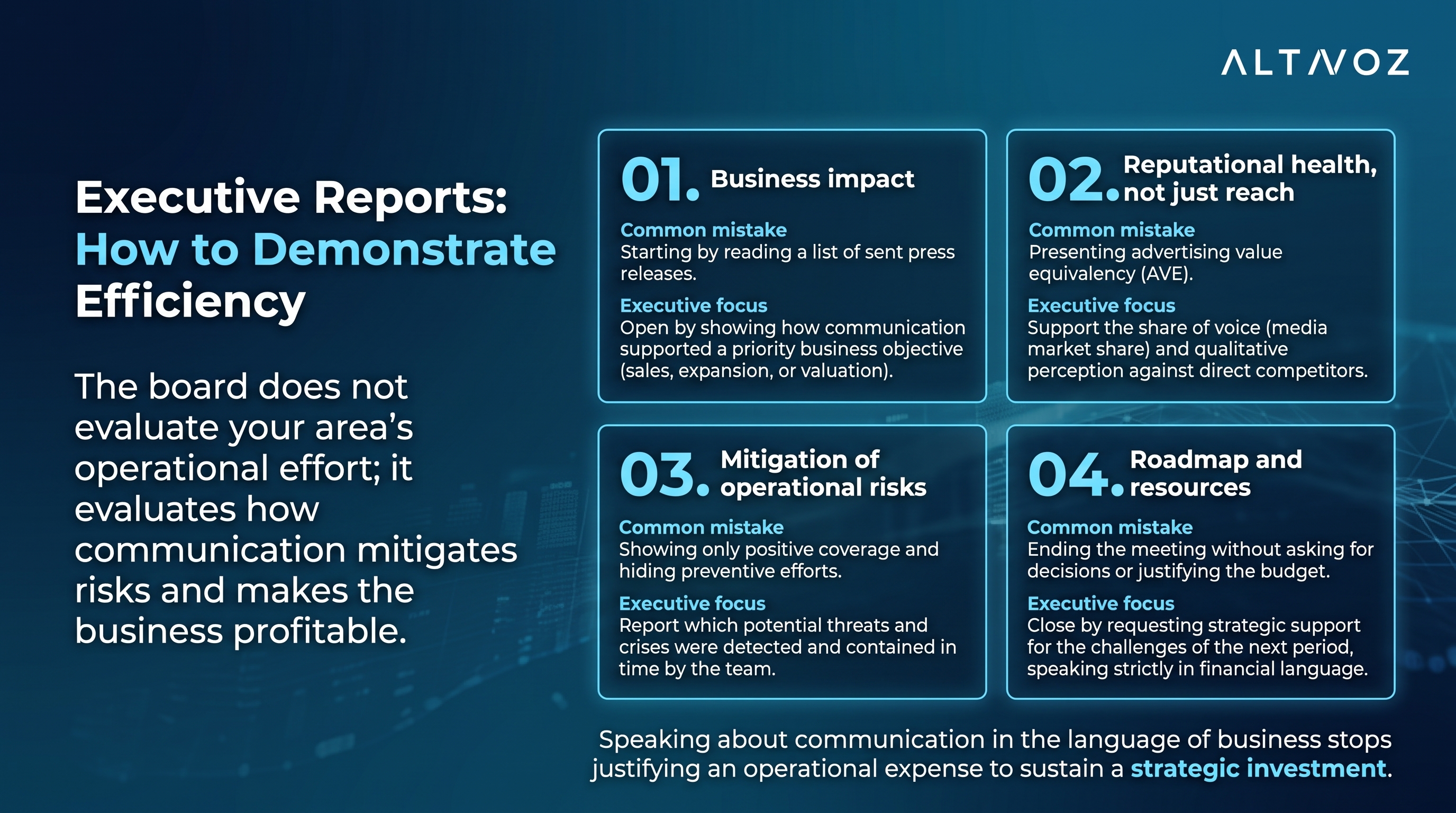
A board of directors does not evaluate operational effort; it assesses business impact, risk containment, and how brand reputation drives long-term enterprise value. Presenting volume without analytical interpretation invites skepticism, reduces department budget allocations, and frames communications as an operational cost center rather than a strategic value driver.
Structuring presentations around an analytical framework demonstrates how press relations, public affairs, and corporate communications safeguard the enterprise's most valuable intangible assets.
Four pillars for structuring a dynamic executive board report
To capture board engagement within a brief time window and defend the strategic value of communications, leadership should organize presentations into four core sections:
1. Executive synthesis of business impact
The presentation must open with the primary conclusion: how communication initiatives supported core business milestones during the period, such as entering new markets, boosting client retention, or protecting valuation. Utilizing conversion and perception metrics establishes a relevant framework for C-suite discussion.
2. Brand reputation health and net sentiment analysis
Rather than displaying gross reach charts, leadership should present qualitative indicators covering public perception, industry share of voice, and brand sentiment trajectories. Demonstrating a favorable market position relative to key competitors validates corporate positioning effectiveness.
3. Operational risk mitigation and crisis preparedness
Board members value a team's ability to identify and contain threats that could disrupt business continuity. Reporting early-flagged issues, response protocols deployed, and official position containment demonstrates proactive risk governance.
4. Strategic roadmap and resource allocation
The reporting session should conclude by steering discussion toward upcoming priorities. Outlining key initiatives aligned with market headwinds and justifying required budget allocations positions the communications director as an indispensable strategic partner.

Methodology for delivering a dynamic boardroom presentation
Facilitating an interactive dialogue with board members requires applying advanced synthesis and data visualization practices:
- Executive dashboard formatting: consolidating core data into a single, high-level visual dashboard that synthesizes key performance indicators (KPIs) without navigating lengthy slide decks.
- Lead-with-the-headline rule: starting every topic block with the primary takeaway or finding before providing supporting context or metrics.
- Technical appendix for deep-dive inquiries: maintaining detailed datasets, media lists, and full research reports in a reference appendix to address granular board questions precisely.
- Focusing discussion on decision-making: framing the presentation around strategic choices to leverage board member expertise rather than seeking superficial activity validation.
Speaking business language to secure leadership authority
Efficiently reporting communications results to the board of directors is a hallmark of senior executive leadership.
Organizations that successfully translate brand reputation into financial and business impact not only secure board backing and budget allocations, but also elevate strategic communications into a core function for enterprise decision-making.
At Altavoz Comunicaciones, we specialize in corporate communications counsel, public relations strategy, and reputation management for business leaders and executive boards. We help organization’s structure measurement and reporting frameworks with executive rigor, turning reputational capital into a visible asset that builds lasting market trust.