
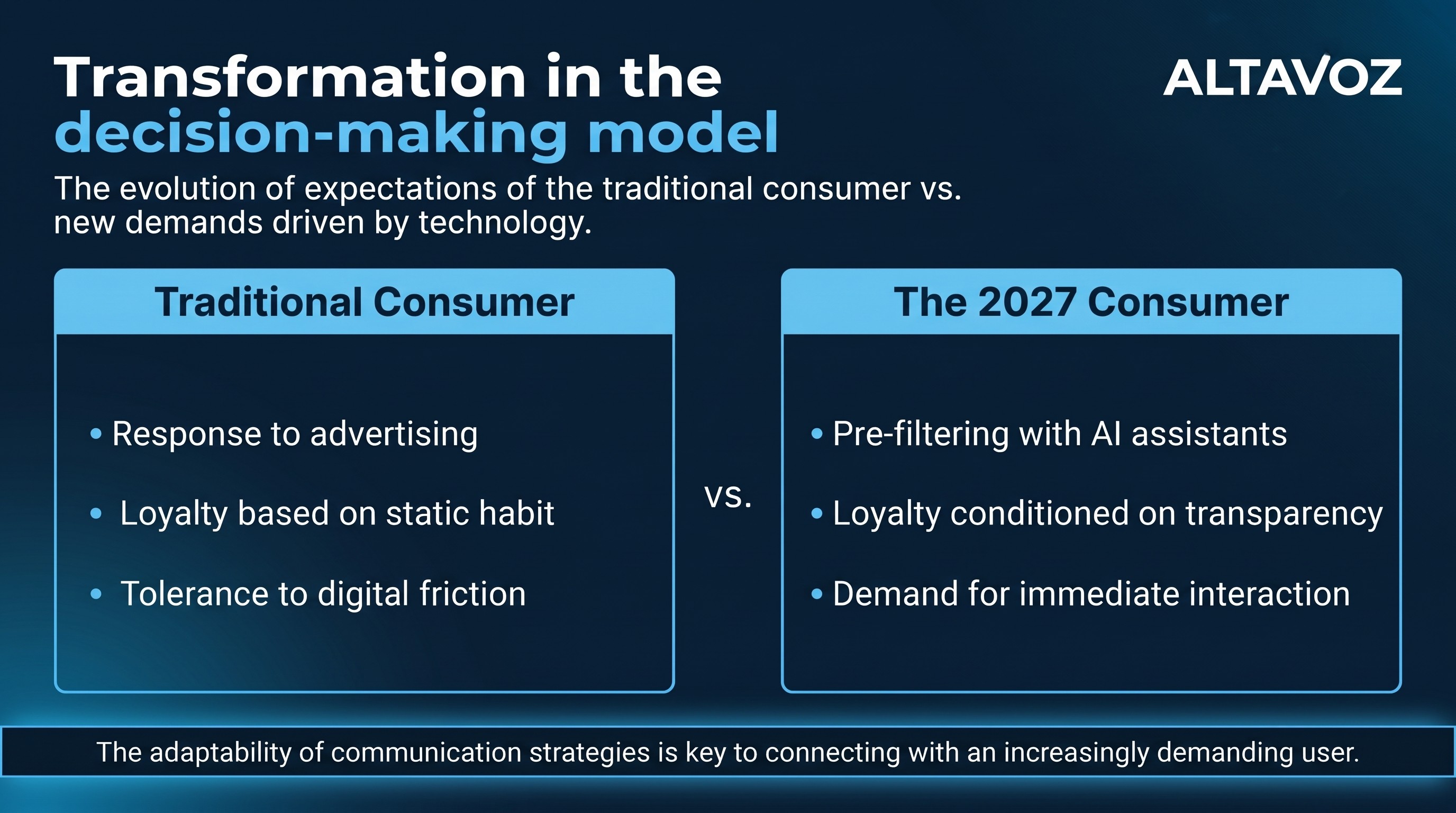
The evolution of consumer behavior has reached a strategic inflection point driven by the adoption of artificial intelligence agents in daily routines, demands for radical transparency, and a conscious re-evaluation of personal and economic value. In today's business ecosystem, understanding consumer dynamics requires moving beyond traditional demographic frameworks. Purchasing decisions no longer respond to standardized advertising triggers, but to a rigorous filtering process where trust, tangible utility, and seamless interaction dictate brand preference.
For marketing directors, corporate affairs leads, and executive boards, deciphering the 2027 consumer in PR strategy involves adapting operational models to engage a more analytical, hyper-connected, and discerning buyer.
The shift from impulse buying to analytical validation
The most significant shift in consumer behavior is the replacement of impulse buying with continuous verification. Supported by AI virtual assistants that compare product specifications and filter offers in real time, buyers enter brand touchpoints with unprecedented levels of information.
When an organization relies solely on self-declared excellence or broad advertising campaigns, it meets immediate buyer skepticism. Audiences prioritize performance proof, product durability, and transparent pricing logic, demanding clear explanations regarding a brand's value proposition.
Three strategic pillars shaping purchasing decisions
To capture market share and sustain commercial growth, executive leadership must focus customer engagement across three primary dimensions:
1. Algorithmic mediation and AI assistant optimization
Consumers routinely leverage conversational agents to synthesize purchasing choices and shortlist vendors. Ensuring brand visibility within these systems demands accurate, accessible corporate data backed by high-authority external sources (earned media).
2. Broadened wellbeing and friction reduction (Well-X)
Wellbeing has expanded beyond personal health into a universal evaluation framework for brand value. Buyers favor solutions that streamline daily routines, reduce operational stress, and deliver tangible lifestyle improvements.
3. Radical transparency and verified sustainability
Modern buyers reject unsubstantiated environmental or ethical claims. Purchasing decisions are increasingly tied to supply chain traceability, clear ingredient sourcing, and proven corporate accountability.

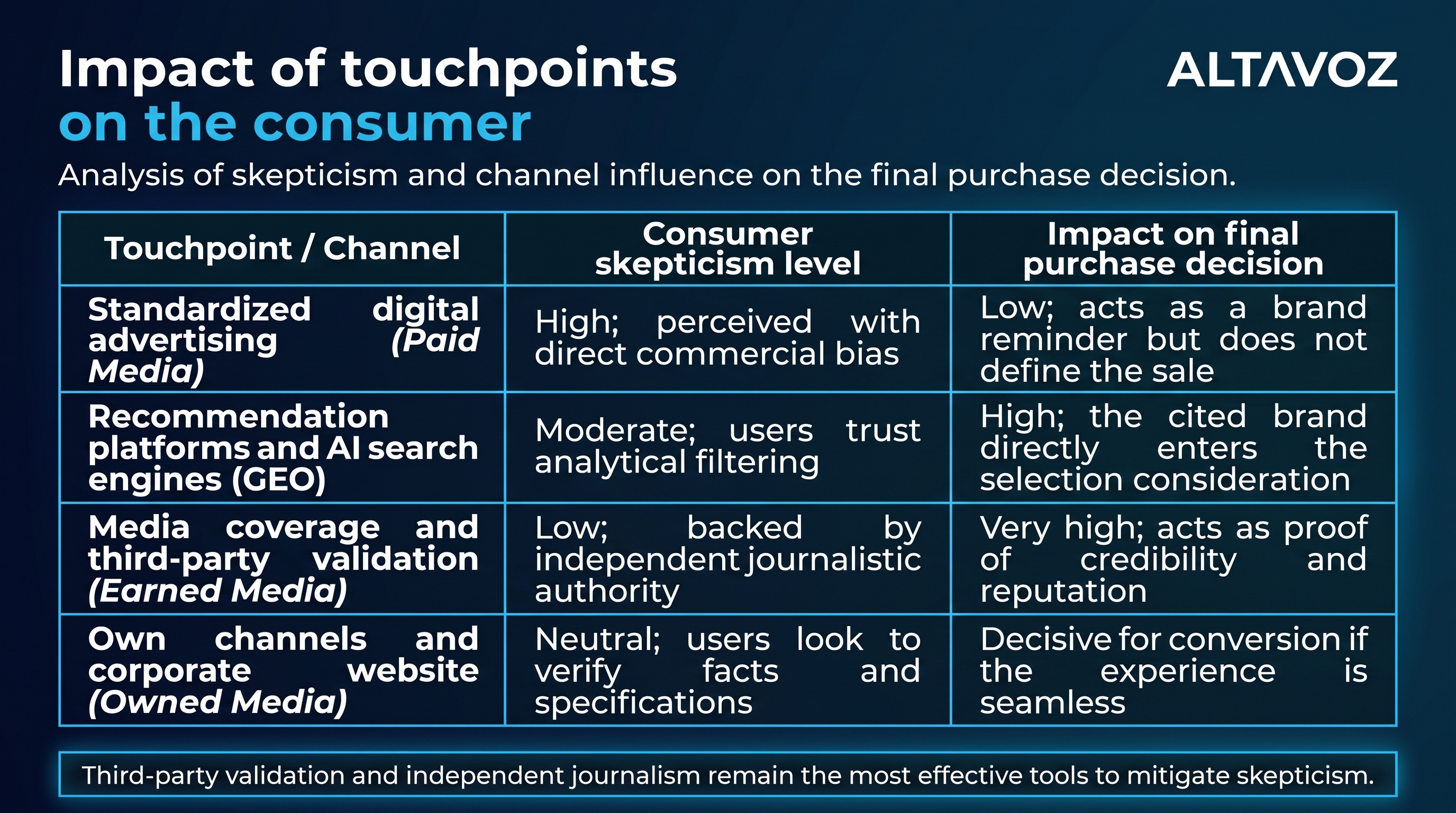
Strategic matrix: engagement channels and influence levels
Evaluating touchpoint effectiveness allows marketing leadership to reallocate commercial resources toward high-impact channels:
Trust as the foundation of brand equity
Understanding the 2027 consumer is not merely about adopting digital software, but about pairing analytical precision with an authentic commitment to stakeholder trust.
Market leaders will be those that leverage technology to eliminate friction, deliver total transparency, and build lasting customer relationships grounded in genuine value.
At Altavoz Comunicaciones, we advise business leaders and executive boards on designing comprehensive reputation management, corporate communications, and brand positioning strategies. We help organizations adapt public messaging to meet evolving consumer expectations, securing high-impact media presence that drives market trust and long-term enterprise growth.